Irański raport tygodniowy: Wyłania się nowy front, plus następstwa rozmów Trump-Xi i pogłoski o wznowionych atakach - ABC News

This weekly briefing discusses the ongoing tensions in the Middle East, 79 days after a war began and five weeks after a ceasefire was announced. Key developments include a drone attack near a nuclear power plant in the UAE, stalled negotiations between Washington and Tehran, speculation about renewed US and Israeli strikes on Iran, and continued Israeli strikes in Gaza.
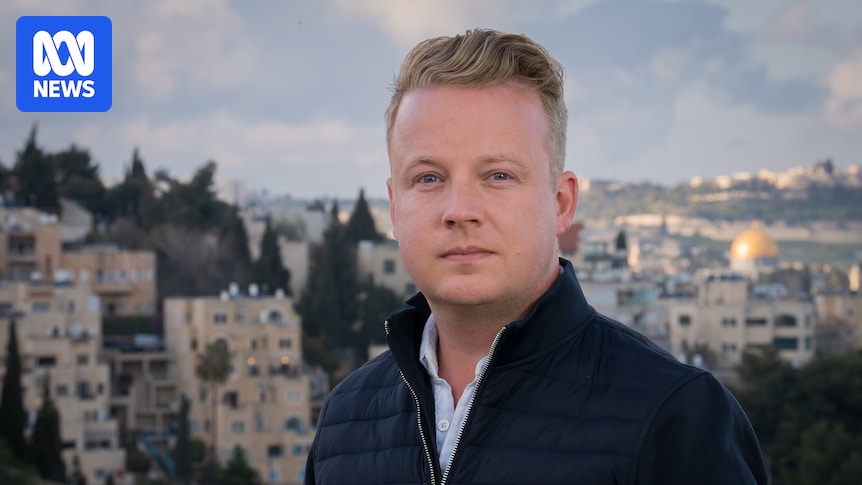
Hello, ABC Middle East correspondent Matthew Doran here in Jerusalem.
This is our weekly update on what's happening in the Middle East war. It's now 79 days since it began, and five weeks since a ceasefire was announced.
Here's what you should know now:
- The United Arab Emirates has launched an investigation into a drone attack that hit near a nuclear power plant in the Al Dhafra region. UAE officials said three drones were launched from the country's west, which is where it borders Saudi Arabia. Two were intercepted, while the third hit an electricity generator near the Barakah nuclear facility. They stressed the plant was not leaking radiation and was operating as normal, but the international nuclear watchdog raised grave concerns about the incident.
- Over the weekend, Iranian state television broadcast a news presenter in a studio firing a gun at the flag of the UAE. State media also broadcast footage of families receiving training in how to use weapons in the event of needing to defend the country.
- Israeli Prime Minister Benjamin Netanyahu said he would be speaking with Donald Trump on Sunday, after the US president's trip to China last week. The war with Iran was on the agenda in talks between Trump and Xi Jinping, but the US president said he had not asked his Chinese counterpart to use his influence to pressure Iran into a deal.
- Negotiations between Washington and Tehran over ending the war remain stalled. And there was further speculation over the weekend, including in The New York Times, that the US and Israel were preparing to restart strikes on Iran as early as this week. Trump, in a post on his Truth Social platform, said: "The Clock is Ticking, and they better get moving FAST, or there won't be anything left of them." (Emphasis from the president, not from me.)
- In Gaza, local health authorities said at least five people were killed in Israeli strikes, including three near a community kitchen in Deir Al-Balah, in the centre of the strip. Gaza's health ministry said more than 870 people had been killed by Israel since the October ceasefire came into force. It followed a strike on Saturday that killed the head of Hamas's armed wing in Gaza City. The timing of that strike has been criticised by the mother of one of the final hostages freed by Hamas last year, Vicki Cohen. She's said it was further evidence of the Netanyahu government's failure to secure the timely release of Israeli captives like her son, Nimrod, and she accused it of lying about its inability to continue striking Gaza once the hostages were returned to Israel.
Here's what to watch in the days ahead:
While the United Arab Emirates has launched an investigation into where the drone attack came from, many will be immediately pointing the finger at Iran, given the hundreds of missiles and drones it has fired at the Gulf state during the war.
Perhaps, there's an attempt by Tehran to point the finger at other countries' nuclear capabilities at a time when it's being told it needs to curb its own ambitions in that space.
Some have seen its decision in March to fire missiles towards Dimona, close to Israel's generally unspoken-of nuclear facility in the country's south, in the same light.
The UAE's insistence that it has the right to forcefully respond to threats against its national security is further evidence, as if it is needed, of how precarious the situation in the region is, now more than five weeks since the sudden ceasefire between the US and Iran was announced.
Last week, it was reported that the UAE had launched attacks on Iran, shifting its position from simply a target of Iranian strikes to a combatant in the broader war, at a time when its ties with Israel seemed to be getting deeper and were coming under greater scrutiny.
Saudi Arabia, a country with its own fraught relationship with the UAE, was also said to have fired on Iran after it was targeted by missiles and drones from Tehran.
The speculation that the US and Israel are preparing to restart the war has been simmering for weeks, although it may be seen in a different light now that Trump has met Xi and flown back across the Pacific without any explicit involvement from Beijing in trying to use its influence to convince Iran to accept a deal.
It's hard to take some of the US president's rhetoric, such as the "clock is ticking", seriously given it's a variation on a theme he's trotted out on social media for more than a month now.
But any further attacks on sensitive sites could tip the balance.
And here's what I'll be keeping an eye on:
It's quite separate to the Iran war, but something to keep note of: The ships sailing as part of the Global Sumud Flotilla that weren't intercepted by the Israeli military last month off the coast of the Greek Island of Crete have set off from Türkiye. There are 11 Australians among the crew of the 52 boats.
They're trying to break Israel's almost two-decade maritime blockade of Gaza and highlight the humanitarian crisis in the war-ravaged strip. Based on what happened to their colleagues in late April, it will not be surprising if they experience the same fate.
They were approached in international waters in the middle of the night by the Israeli navy, with the crew detained and dropped off in Greece, and their vessels either seized or abandoned, some rendered inoperable.
At the time, the flotilla organisers accused Israel of piracy on the high seas, and some countries — including Italy, which has previously supported Israel — took a very firm stance criticising its actions.
Thanks for joining me. I'll see you at the same time next week.
Źródło: RAK Brave World Topics

Zrób z tego przeszczep
Ten artykuł to guz. Jeden klik i Stanosky robi z niego TWÓJ materiał — tekst, mem, rolkę albo kawałek. Cena w żetonach stoi na kaflu.